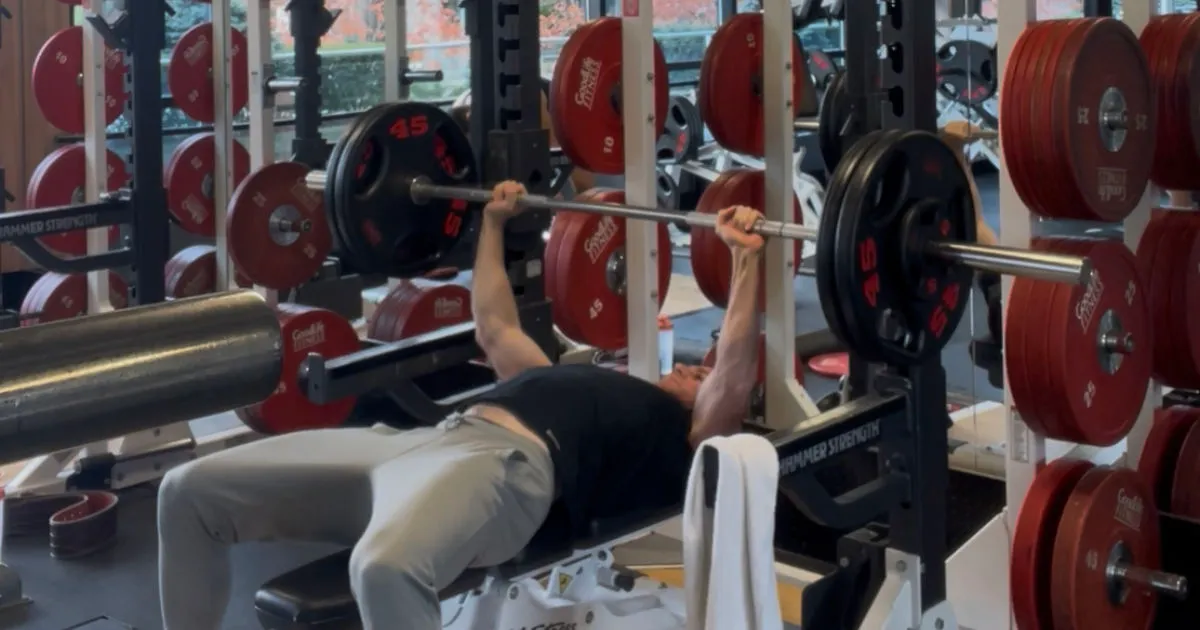
A Year of Lifting: My Fitness Transformation
How I went from "dad bod" to "rad bod" at 43 through calorie tracking, weight training, and learning to eat like a grownup.
A former colleague and friend of mine passed away in late 2024. She had a brain tumour, so it wasn’t unexpected, but it hit hard. She was my age. That triggered a topical midlife crisis about the finiteness of life.
One realization was that I’d become sedentary. Long hours in front of a computer screen, lots of Zoom meetings, but not a lot of activity. As a startup founder, I sometimes have stress (spoiler!) and I had a bad habit of managing that stress with chocolate. Delicious, but not good for my midsection. I always thought of myself as “athletic” and still had OK muscle tone, but honestly, I was skinny-fat.
In March 2025, I decided to do something. I started tracking calories to remain in a caloric deficit. I was worried about losing muscle, so I started strength training as well. I hadn’t done regular strength training since my late 20s.
I didn’t know it at the time, but 2025 was going to be different.

Getting Started: Write Down Your “Why”
Early advice I got was to write down five reasons why you want to lose weight.
I’ll be honest: losing weight kind of sucks. You’re hungry a lot of the time. Social occasions are harder if you want to be consistent.
But with your reasons written down, you have an artifact to refer to as your guiding light. Especially in the early phases, before your diet has become habitualized.
My reasons were primarily about aesthetics and functionality. I wanted to look better and to age well. Find your reasons.
Calories In, Calories Out
It really is as simple as that.
- Eat in a caloric surplus, you gain weight.
- Eat in a caloric deficit, you lose weight.
The trick is consistency. Most people, when they say they’re dieting, aren’t properly tracking their calories or are underreporting what they’re eating. It’s really easy to consume 150-200 extra calories in a day and suddenly that takes you from deficit to maintenance (or even surplus).
First step: find your total daily energy expenditure (TDEE) using a calculator. Your TDEE depends on your weight, height, gender, and average exercise level.
One pound of fat is roughly 3,500 calories. So to lose about 1 lb per week, you want a deficit of 500 calories per day.
My TDEE is around 2,500 calories. When cutting, I targeted 2,000 calories per day. That’s a deficit of 500 calories per day and I lost about 1 lb per week. Ten weeks later, I was down 10 lbs.
Simple, Not Easy
Following up on above, losing weight is “simple, not easy.”
Again, it’s all just calories in, calories out. Simple.
But maintaining that consistency and discipline is hard.
It’s remarkably easy to be really good for 6 days of the week, then splurge a little too much on day 7 and eradicate the entire deficit you worked hard for all week.
One trick I read: you can have one off day, but don’t make it two in a row.
If you stumble, or have an off day, or indulge a little too much, it’s OK. Don’t beat yourself up. Don’t try to make it up the next day. Just get back on your program.
Ultimately, it’s a journey. If it takes 4 weeks, or 10 weeks, or 16, or 25 to achieve your goal, what does it matter? Over the timespan of the rest of your life, these are inconsequential time periods.
We Are Bioreactors
Our bodies evolved with strong mechanisms to store fat when there’s excess energy available, so we have fuel during scarcer times. Fat is basically our long-term battery. (Note: the reality is more sophisticated and adipose has a major endocrine role to regulate appetite and metabolism).
For most of human history, food availability was more variable and harder to come by. If we landed a big meal, it was advantageous to store any excess energy for later.
But in today’s modern world, it’s ridiculously easy to get overnourished. Sugar is everywhere… and it’s delicious and our brains learn that it’s rewarding and push us to want more. Thanks dopamine! Need food? Go to the market or a restaurant and get whatever you want, whenever you want it.
So at some level, losing weight is about “starving yourself.” Societally, that comes across as a loaded term, but evolutionarily our bodies have evolved to tolerate it. We gain fat when consistently overnourished. We lose it when consistently undernourished. Stay undernourished long enough and you’ll lose weight. Even if the body adapts and it’s not always a linear progression week over week.
Change the inputs (diet, exercise) and your body will change the outputs. Thousands of years of evolution programmed us this way.
Track Everything
This part is hard in the beginning but becomes easier over time if you keep eating the same things.
I used the Lose It app, but there are plenty of calorie trackers. When I was cutting, most of my diet was chicken with some kind of starch (rice or potato) and veg. Really easy to track.
For more complicated meals or restaurant food, I’d use ChatGPT to help estimate calories. Upload a photo of the plate and ask it to estimate. It’s not perfect, but it doesn’t have to be.
Lift to Preserve Muscle
I’d tried calorie restriction in the past but always hated it because I’d lose muscle mass at the end of a diet. The Internet suggested lifting weights while dieting to avoid that fate. “Body recomposition” they call it.
From what I read, if you’re in a caloric deficit, your body will burn existing fat and muscle for energy. Losing muscle was against my aesthetic goals.
By lifting weights with progressive overload, the body is forced to keep (or even synthesize) muscle, and there’s a higher likelihood that fat is the energy source consumed.
I dusted off the adjustable dumbbells in my basement and found a 60-day dumbbell workout on YouTube. After 60 days, I maxed out what I could do with dumbbells alone, especially for legs, so I joined a gym and switched to an upper/lower split.
Protein Is King
If you’re lifting, protein matters. General guidance is 1g of protein per pound of bodyweight. I target 180+ grams per day.
I learned about the thermic effect of food. Your body uses more energy metabolizing protein than fat or carbs.
My diet was (and still is) generally:
- Breakfast: A protein shake (banana, frozen berries, greek yogurt, protein powder, creatine, peanut butter)
- Lunch/Dinner: “Chicken with stuff.” Take chicken thighs or breast, put some kind of rub on it (masala, piri piri, gochujang), and either barbecue or stir fry
- Variety: Turkey or chicken chili is also really satisfying
Meal prep helps tremendously so you’re not constantly cooking. I generally prep on Sunday and Thursday and graze from there.
Two great YouTube resources for high protein meal prep are Chef Jack Ovens and Ethan Chlebowski.
The Cut: 190 to 175
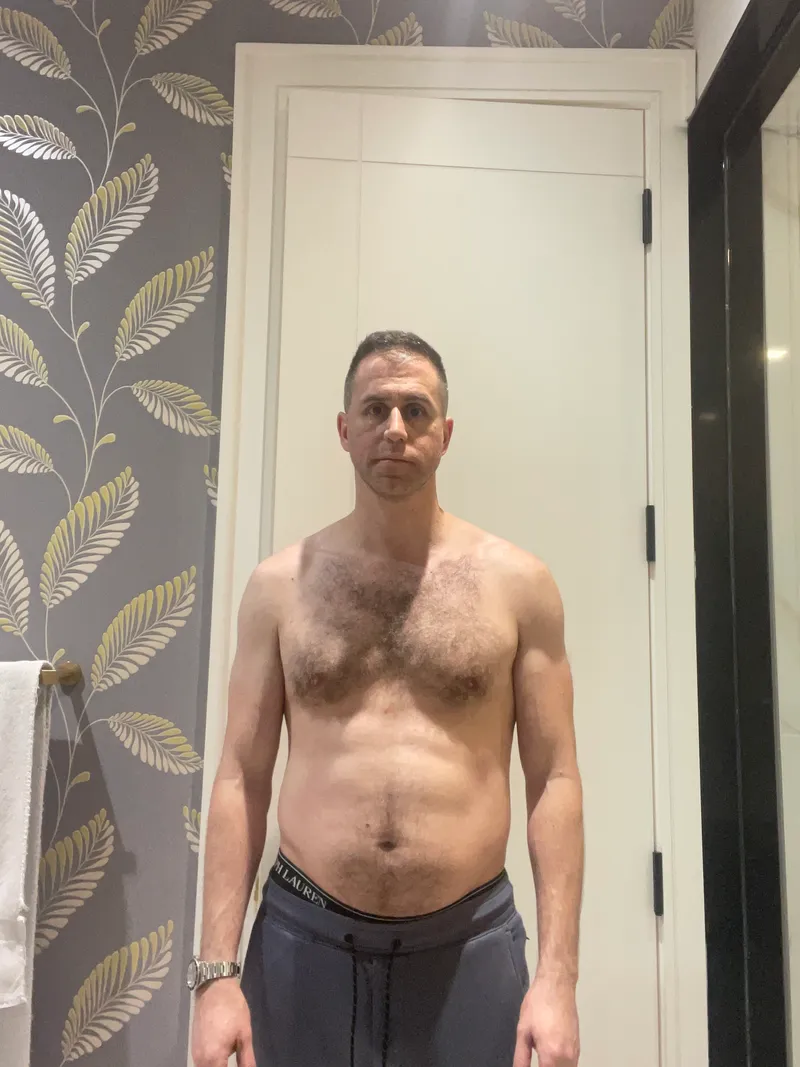
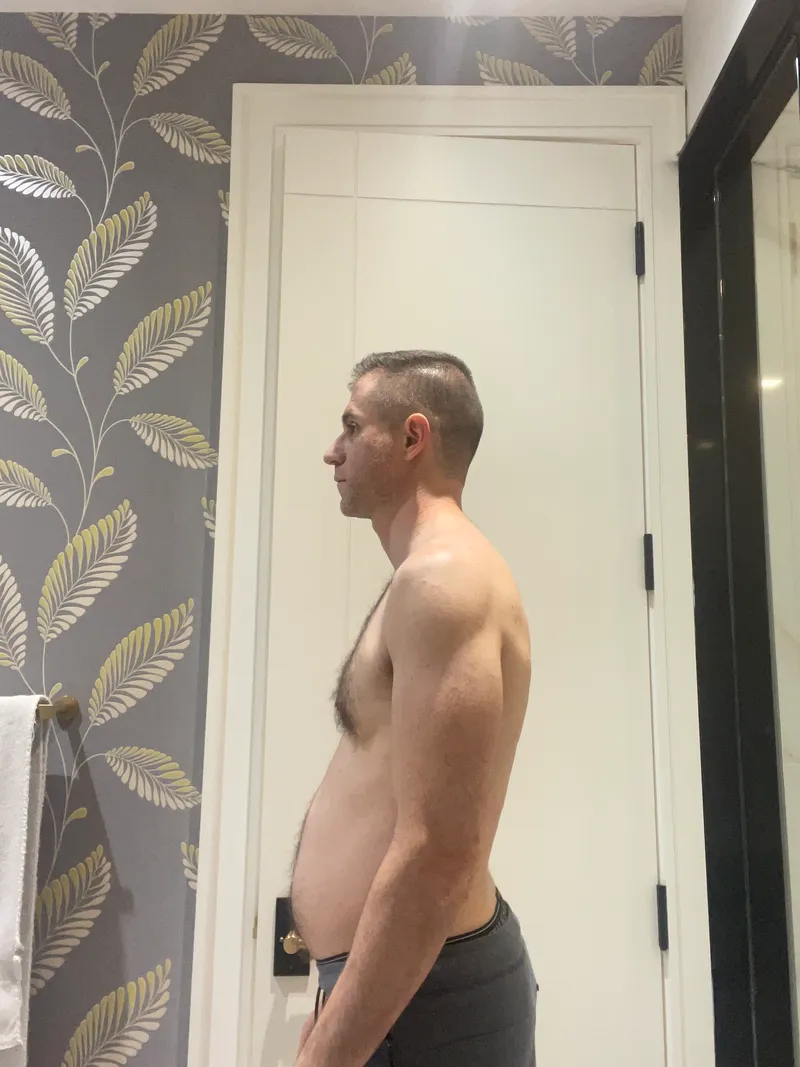
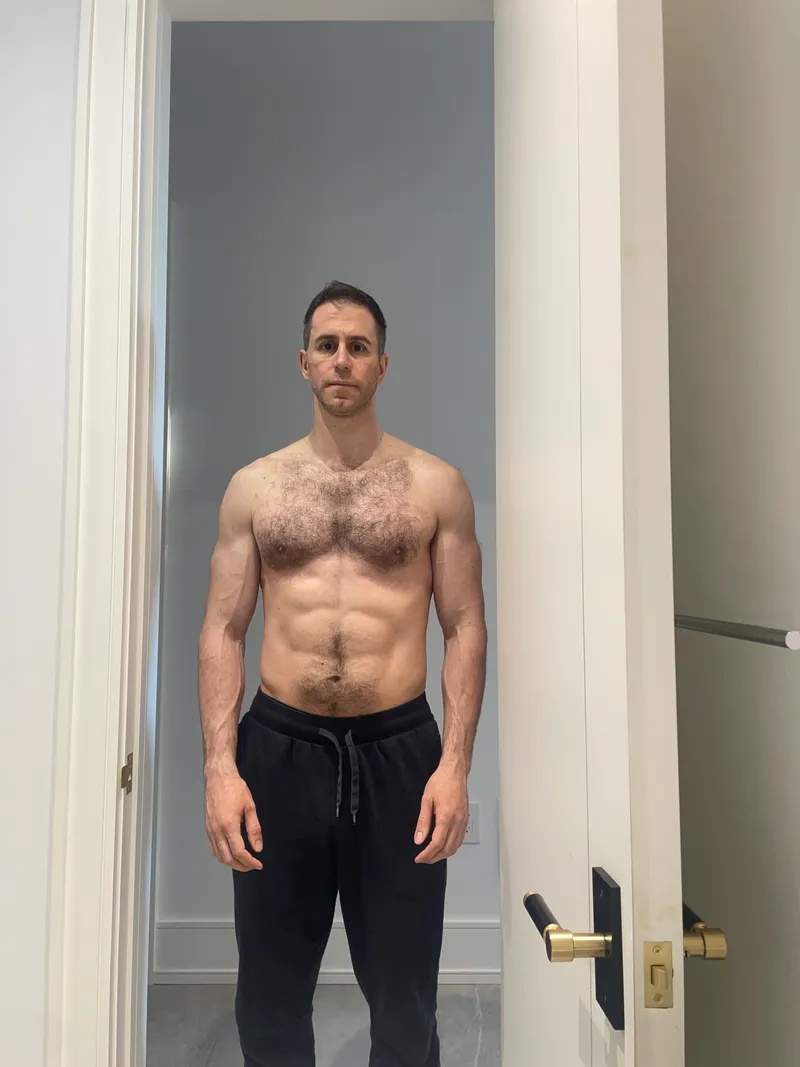
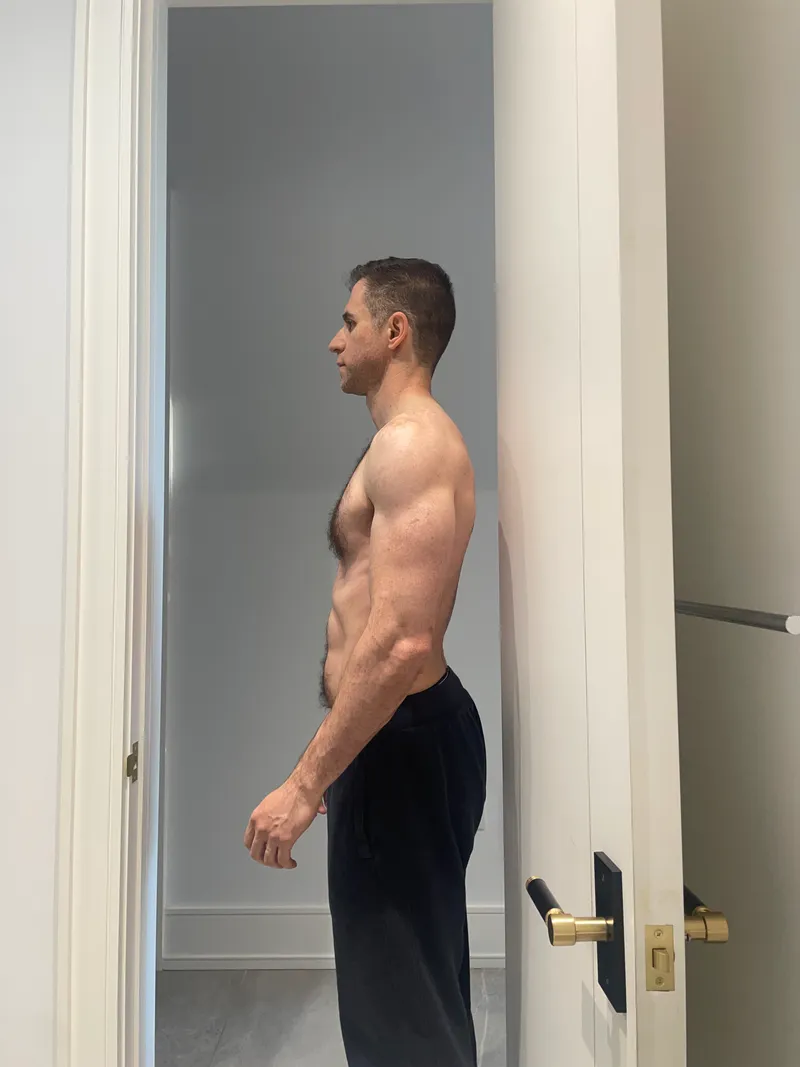
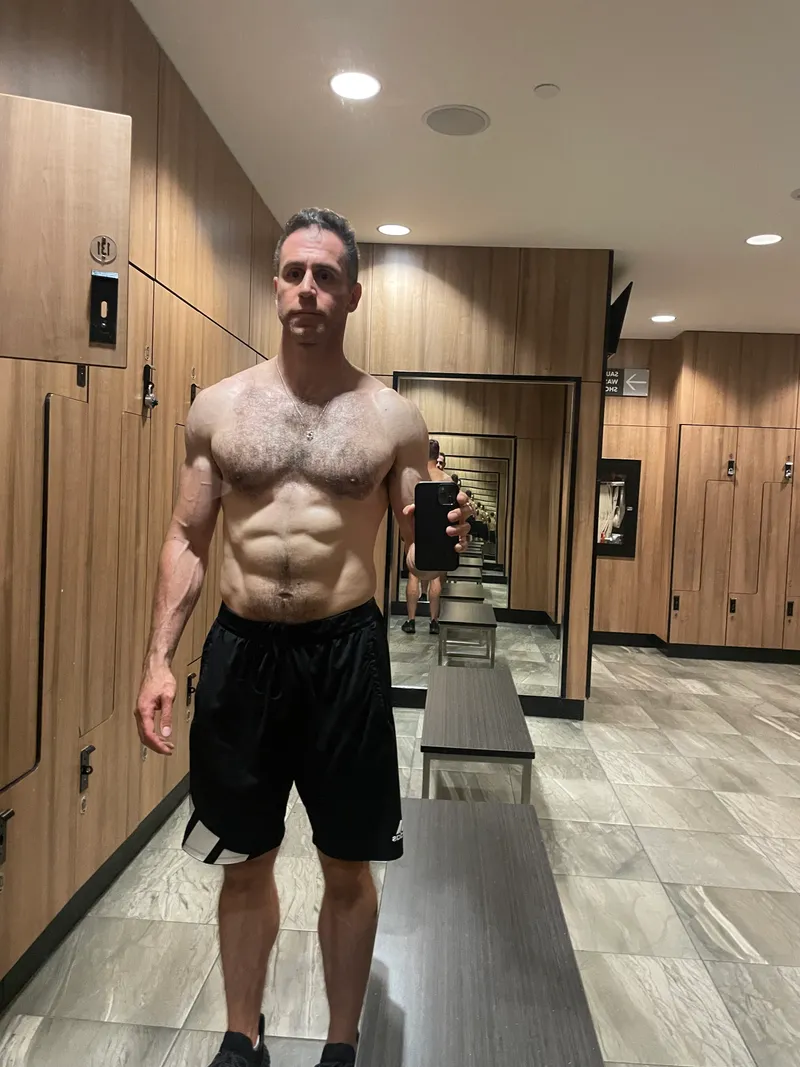

Between the caloric restriction and weights, I got my weight down from 190 lbs to 175 lbs in a few months. I looked a lot leaner, which was fun for summer.
Summer: Peak Insanity
In late spring, I decided to also train for a 5k race in September. So I added running 3x a week.
I was also doing martial arts classes (Krav Maga and BJJ) in the evenings.
At its peak, my schedule was:
- Gym 4 mornings a week (upper/lower split)
- Running 3 mornings a week
- Krav Maga 2-3 evenings a week
- BJJ 2 evenings a week
It was a lot. Maybe too much. But I was riding high on progress and momentum.
Learning to Eat Like a Grownup
I’m slightly embarrassed to admit this, but my other takeaway in this journey was learning to eat like a grownup. I used to love carbs: pizza, pasta, chocolate. Mmmm.
I’m a little less hardcore now about my diet and will still occasionally indulge in sweet treats, but I’ve learned to appreciate chicken/rice/veg as a meal and ensure I hit a minimum amount of protein daily.
What’s Next: Winter Bulk
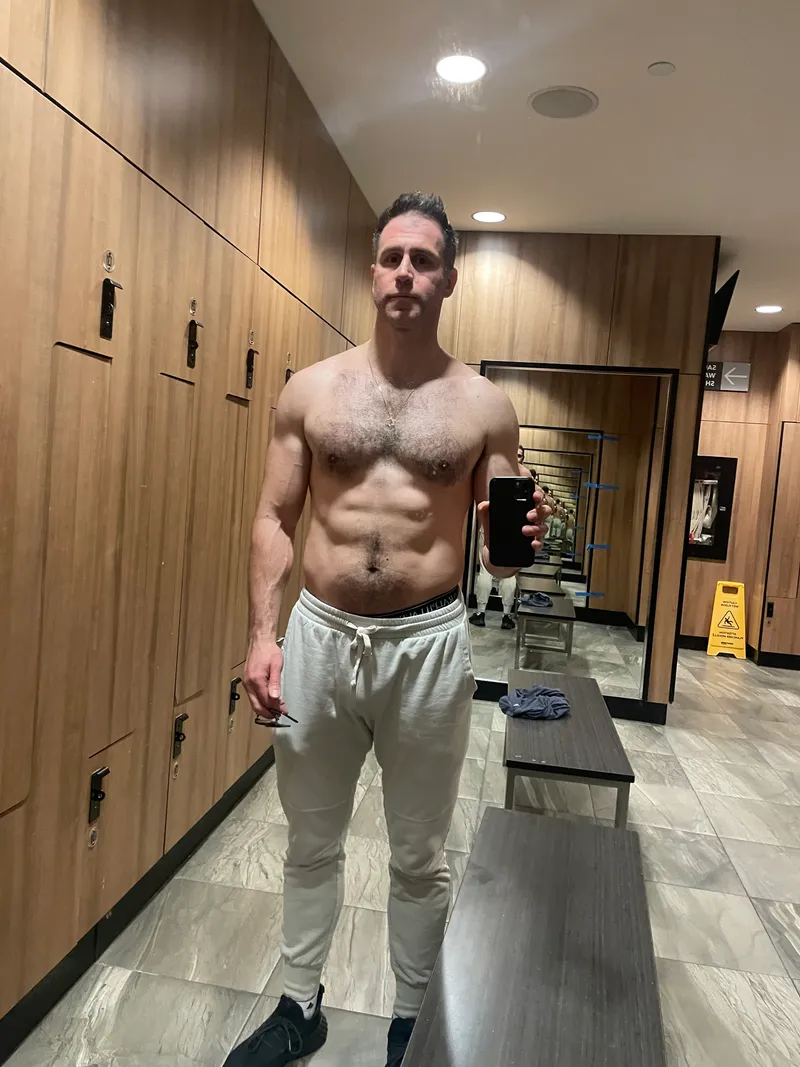
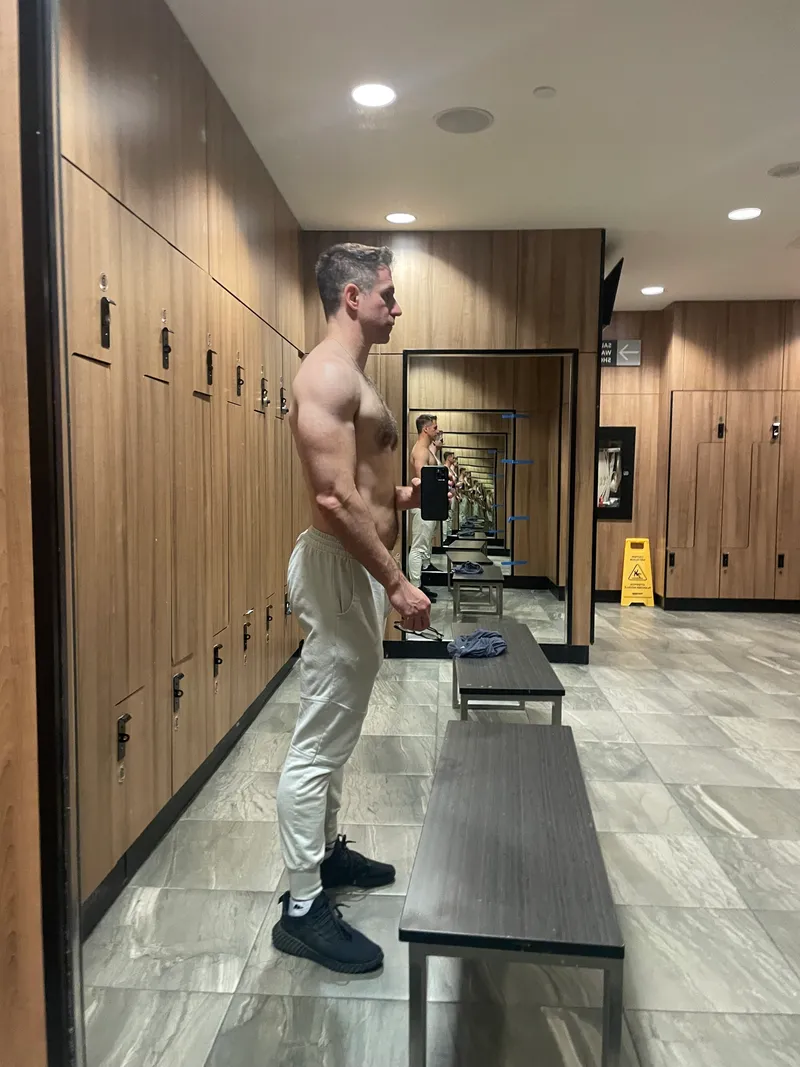
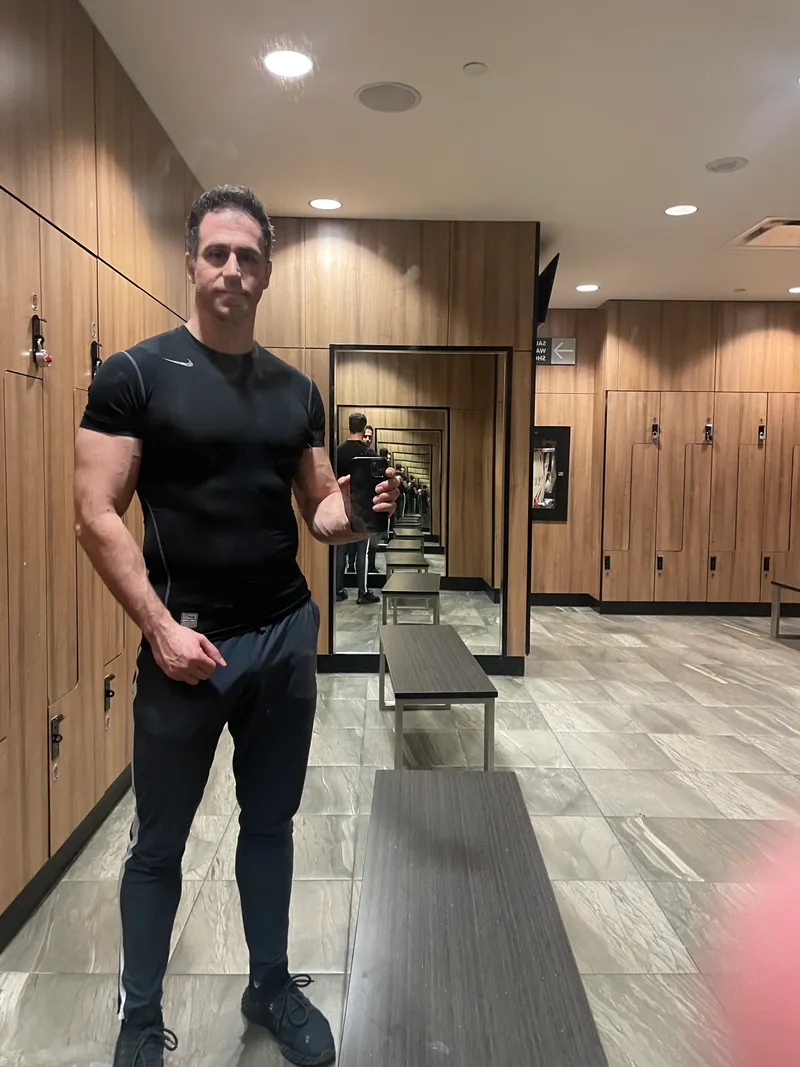
For winter, I’ve decided to bulk. I’m back to 190+ lbs, but with a little more mass: slightly bigger arms, back, chest, and legs. I’m a wee bit squishier, but I still have abs definition. I’ll likely do another cut in the spring.
Same starting weight as March 2025, but completely different body.
I’ve mellowed on the training schedule too. It’s winter, so no race training. I’ve dropped to 2x Krav and 1x BJJ. Still hitting the gym 4 times a week though.
It’s been almost a year of lifting and commitment to a healthier lifestyle. The friend who passed would probably roll her eyes at my gym selfies. But she’d also understand why I’m taking them.